
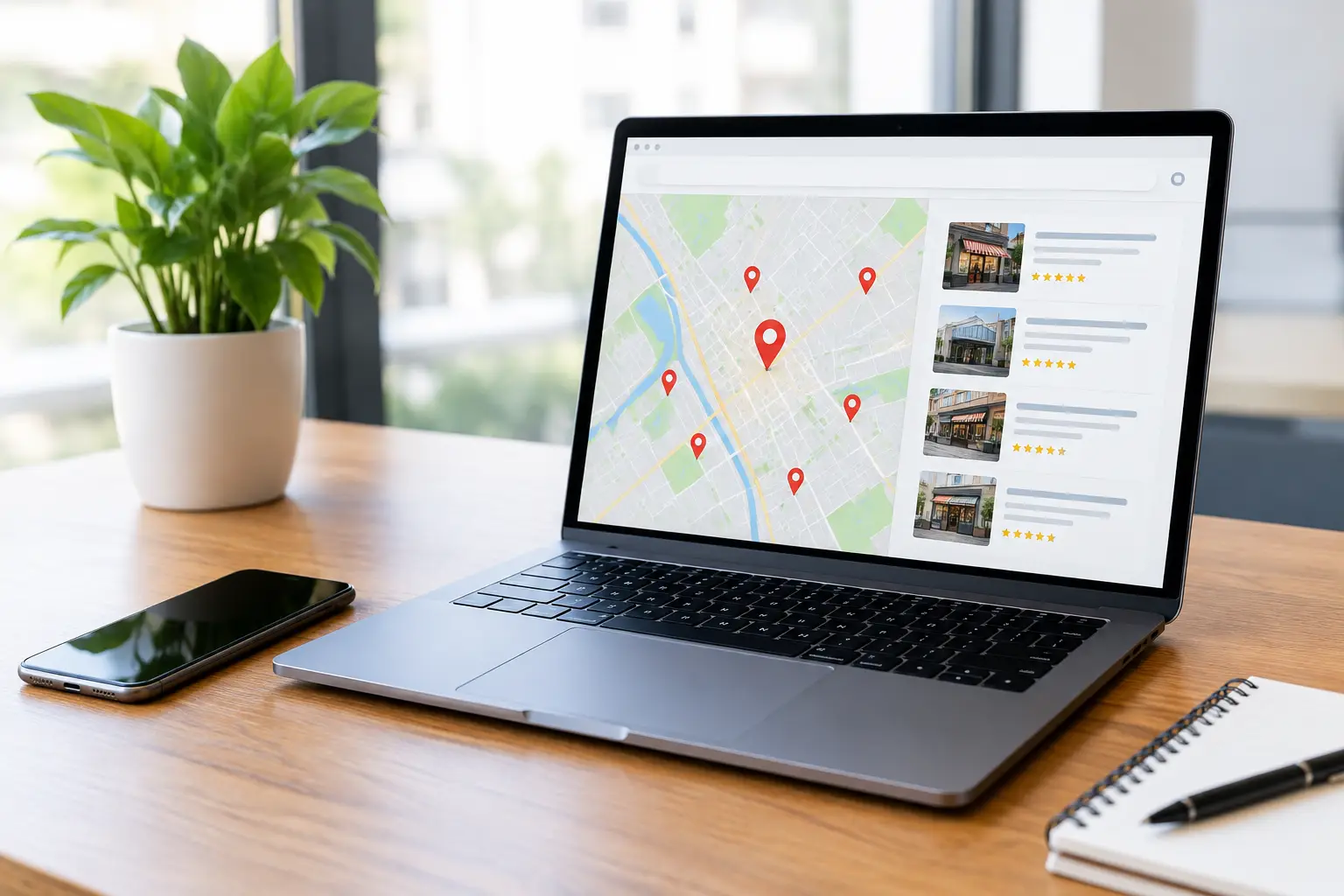
A prospect searches for your service, finds three similar companies in the map results, and starts comparing details. One listing has the correct phone number, current hours, reviews, and a website that matches. Another has an old address and two different business names across the web. Business citations help determine which company looks established, trustworthy, and ready to contact.
For local businesses and companies serving defined markets, citations are not a minor SEO task. They are part of the evidence search engines use to understand who you are, where you operate, and whether your business information can be trusted. Done properly, they support stronger local visibility, cleaner customer journeys, and more qualified calls, form submissions, and visits.
What Are Business Citations?
A business citation is any online mention of your company’s core identifying information. Most citations include your business name, address, and phone number, often called NAP. They may also include your website, business category, operating hours, email address, service areas, photos, or a short company description.
Citations appear in business directories, mapping platforms, industry websites, local chambers, review platforms, supplier pages, social profiles, and data aggregators. A listing does not need to include a direct website link to count as a citation. The value comes from consistent, credible confirmation that your business exists and operates where it says it does.
For example, a roofing company in Dallas may appear on Google Business Profile, Apple Maps, Bing Places, Yelp, a local contractors directory, and a regional home-services association site. If each source presents the same core details, the company sends a clear trust signal. If the information conflicts, both search engines and potential customers receive mixed messages.
Why Business Citations Affect Local SEO
Local search is built on confidence. Search engines need to connect a business entity with a real location, relevant services, and a reliable public presence. Citations are one part of that verification process.
They are not a shortcut to the top of the map pack. A citation campaign cannot compensate for a weak website, poor reviews, irrelevant categories, or a Google Business Profile that has not been properly optimized. But accurate listings reinforce the broader local SEO system. They help search engines reconcile your data across the web and reduce uncertainty around your location and contact details.
The customer impact is just as practical. An outdated phone number can send a high-intent lead to a dead line. A wrong suite number can create a frustrating first visit. Duplicate listings can split reviews and make your company appear disorganized. These are conversion problems as much as visibility problems.
For multi-location organizations, the stakes are even higher. A single inconsistent naming convention or outdated location record can be repeated across dozens of platforms. Small data problems become large-scale brand and lead-generation problems quickly.
The Citations That Matter Most
Not every directory deserves the same level of effort. A long list of low-quality websites with little traffic or no editorial standards rarely creates meaningful business value. The goal is relevance, accuracy, and coverage where customers and search engines actually look for information.
Start with the major platforms that influence how people find and verify businesses. Then prioritize sources that fit your industry, geography, and buyer behavior. A healthcare practice, law firm, restaurant, manufacturer, and B2B technology provider will not need the same citation profile.
For many companies, the strongest citation mix includes these four categories:
- Core search, mapping, and business platforms where customers compare local options.
- High-authority general directories and data sources that distribute business information across the web.
- Industry-specific directories, associations, and professional organizations relevant to your services.
- Local publications, chambers, partner websites, sponsorship pages, and community organizations that validate geographic presence.
A mention on a respected local business association site may be more valuable to a regional service company than ten generic directory profiles. Likewise, a specialized listing on a trusted B2B marketplace can be highly relevant for a company targeting procurement teams or enterprise buyers. Citation quality is contextual.
Get Your Core Business Data Right First
Before building new listings, establish one approved version of your business information. This becomes the reference document for every platform, internal team, agency partner, and location manager.
Your legal entity name is not always the name customers recognize, so use the public-facing business name consistently. Avoid adding keyword modifiers that are not part of the real name, such as “Best Chicago Plumber” or “Top Rated IT Support.” This can violate platform guidelines and create inconsistent records that are difficult to clean up later.
Decide how the address, suite number, phone number, website URL, hours, and service areas should appear. Use a local phone number where appropriate, but do not create unnecessary tracking-number variations across listings. Tracking can be useful for campaign measurement, yet it must be implemented carefully so that your primary business data remains consistent.
If you operate from a home address or serve customers at their locations, follow each platform’s rules for service-area businesses. Do not publish an address simply because it seems useful for ranking. Incorrect location data can trigger listing issues and damage customer trust.
Audit Before You Build
Many businesses already have citations they did not create. Old agencies, former employees, data providers, customers, and directory scraping tools may have generated listings years ago. The first job is to identify what is already published.
A useful citation audit checks for incorrect names, old addresses, disconnected phone numbers, duplicate profiles, missing website URLs, wrong categories, and inconsistent hours. It should also identify claimed versus unclaimed listings. Claimed profiles give you control over updates, photos, responses, and accuracy. Unclaimed profiles leave your public information exposed to errors.
Pay special attention after a rebrand, office move, merger, phone-system change, or new domain launch. These events create the most common citation conflicts. Do not assume an update to one major platform will automatically correct every directory. Data moves slowly, and some sources require manual edits or verification.
Build Citations With Purpose, Not Volume
Once your core data is finalized and existing errors are mapped, build or claim the citations that make strategic sense. Complete each profile as fully as the platform allows. Accurate categories, service descriptions, current hours, quality images, and a clear website destination improve the usefulness of a listing for both searchers and platforms.
Keep descriptions natural. They should explain what you do, who you serve, and why a prospect should contact you. They should not read like a block of repeated keywords. Search engines have become better at recognizing manipulation, while buyers have always recognized generic copy.
For companies with multiple offices, create a distinct location strategy. Each location needs its own accurate data, local landing page where appropriate, and market-specific proof of relevance. Copying the exact same description to every location may be efficient, but it can make each office look interchangeable. Give every location enough unique information to reflect its actual service area and capabilities.
Common Citation Mistakes That Cost Leads
The most expensive citation mistakes are rarely dramatic. They are small inconsistencies repeated at scale. A business may use “Suite 200” on one platform, “Ste. 200” on another, and omit it elsewhere. Minor formatting differences are not always harmful, but a pattern of conflicting records makes management harder and can cause customers to question whether they have found the right company.
Other common problems include creating duplicate profiles instead of claiming existing ones, choosing broad or inaccurate categories, neglecting holiday hours, and leaving location pages disconnected from the company’s actual services. B2B firms often make another mistake: they focus only on national visibility while ignoring the local proof that helps nearby buyers, partners, and talent evaluate the organization.
The answer is not to chase every directory. It is to manage the sources that matter, correct the records that create confusion, and connect citation work to your larger acquisition strategy.
Measure Citations by Business Impact
Citation management should support measurable outcomes, not become an isolated checklist. Track local rankings and map visibility, but also watch website visits from listings, calls, direction requests, form submissions, and lead quality. If a directory sends traffic but produces no meaningful inquiries, its priority may be lower than a source that generates fewer visits but stronger sales conversations.
Citations work best alongside a conversion-ready website, optimized local pages, review management, technical SEO, and paid campaigns that direct prospects to the right location or service page. When every channel presents the same company clearly, your marketing budget works harder. A prospect can move from a map result to a landing page to a sales conversation without encountering conflicting information.
Keep Your Listings Current as You Grow
Business information changes. New services are added, office hours shift, teams relocate, and brands evolve. Citation management is therefore an operational process, not a one-time project. Review major listings routinely and create a clear ownership process for updates before changes go live.
If your company needs stronger local visibility but your listings, website, and lead paths are working separately, start with an audit. Visual Media can assess the gaps, align your local search foundation with your wider acquisition strategy, and build a plan focused on more than rankings. The best citation profile is the one that makes it easier for the right customer to find you, trust you, and take the next step.


